
Empire
2025 _ Indian Ink on Paper

2025 _ Indian Ink on Paper
For over eight centuries, a heavy shadow was cast over the green valleys and ancient stones of Ireland. This era of domination was not merely a change of rulers, but an attempt to overwrite the very soul and memory of the land. Yet, beneath the heavy, imposing architecture of foreign power, the native spirit of the people remained like a quiet, underground river. In the ancient lore of the earth, the serpent has always represented this living, breathing pulse of the soil—a resilient creature that sheds its skin to survive, enduring the longest, harshest winters only to emerge whole and vibrant again.
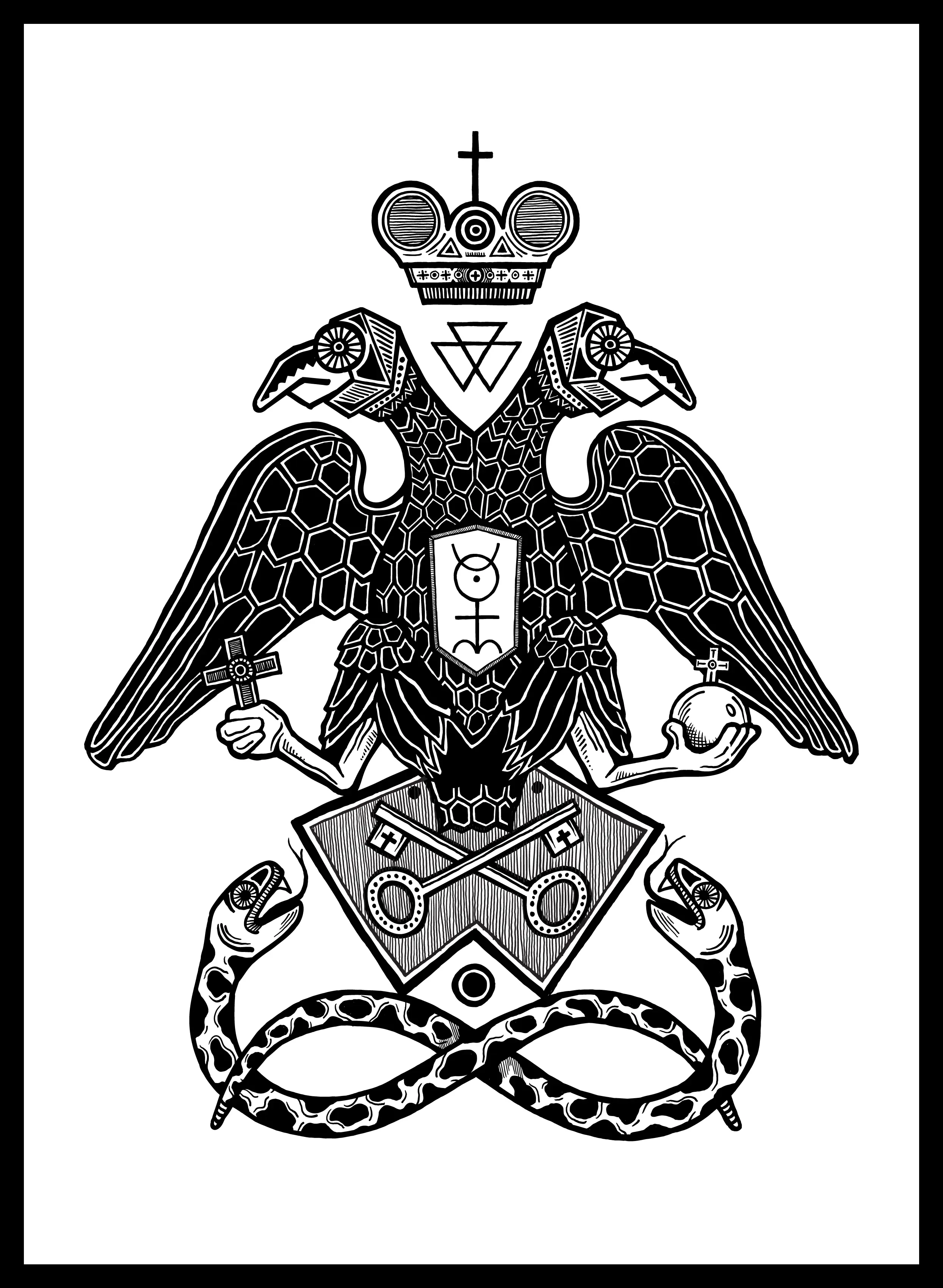
Throughout human history, those who seek to conquer have always tried to cement their rule through towering, unyielding symbols. The double-headed eagle, staring fiercely in both directions, is a universal echo of absolute, inescapable control, acting as a predator that never sleeps. Beside it sit the heavy emblems used by kings and conquerors across the globe to claim divine right: the crown, the cross, and the worldly sphere known as the globus cruciger. There is the Valknut, an ancient knot whispering of bound fates and the unforgiving machinery of conflict, alongside crossed keys that suggest the power to lock away freedom itself. Even the strange, geometric seal known as the Monas Hieroglyphica carries a chilling historical weight: it was created by the very same mind who first coined the term "British Empire." It speaks to a relentless human desire to master the universe, attempting to turn the wild, unpredictable magic of the natural world into a tool for imperial expansion—something rigid, measured, and owned. These are the sharp shapes of empire, designed to feel immovable and eternal.
The artwork captures this profound, silent clash between the crushing weight of conquest and the enduring resilience of the earth. The dominant, double-headed eagle looms large over the centre of the piece, gripping the cross and globus cruciger in its talons, while crowned in absolute, rigid authority. Between its watchful heads rests the Valknut, and upon its chest sits the stark seal of the Monas Hieroglyphica. The crossed keys lay heavy at its feet, acting as a final, jagged barrier meant to seal away the ancient world. But beneath this entire monument of domination, a different, quieter kind of strength survives. Two serpents intertwine at the very foundation of the image, looping endlessly into the figure eight of a lemniscate. This unbroken, flowing knot represents the earthly soul of the Irish people—a spirit that refuses to be shattered. While the harsh lines of empire press down heavily from above, the endless serpent holds the quiet truth that crowns inevitably rust and empires eventually fall, but the deep, breathing roots of the land will never die.