

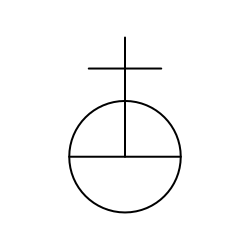
Globus Cruciger
Symbolic Profile
Primary Name: Globus Cruciger (Cross-bearing Orb / Orb of Dominion)
Common Aliases: The Orb and Cross, Globus Cruciger, Reichsapfel (Imperial Apple), Sovereign's Orb, Orb of Dominion, Apple of the World, Sphaera Mundi, Globe of Majesty, Monoradial Orb
Visual Core (the baseline shape): A solid or hollow metallic sphere mounted by a Christian cross (frequently a cross pattée or Latin cross) anchored at the apex, encircled by horizontal and semi-meridional gem-encrusted bands (the cingulum)
Exoteric Keywords (surface meaning): Imperial authority, global sovereignty, divine right of kings, monarchical regalia, world rule, victory of Christ, triumph of order, temporal power
Esoteric Keywords (occult meaning): Spiritualization of the Earth, Mastery of the Material Sphere (Mundus), Cosmocrator, Synthesis of Circle (Spirit) and Cross (Matter), Integration of the Four Elements, Divine Anointing, Microcosmic Earth / Macrocosmic Vault, Salvator Mundi
Astrological or Planetary links: Earth (♁, inverted Globus Cruciger / Symbol of Earth), Sun (☉, Solar Royalty and Gold), Jupiter (♃, Kingship and Imperial Law), Saturn (♄, Structural Order and Sovereign Time)
Alchemical Associations: Terra Prima / Sublimated Earth, The Alchemical Symbol of Earth (♁), Fixation of the Volatile, The Gold Sphere (Aurum), Sublimation of the Material Plane under Spiritual Fire, Prima Materia transformed into the Perfected Globe
Associated Metals: Gold (Sun / Divine Sovereignty), Electrum, Brass/Bronze (Imperial Stability), Jewels/Precious Stones (Virtues and Heavenly Stars)
Traditional Colours: Imperial Gold (Solar Majesty), Royal Purple / Vermilion (Sovereign Authority), Lapis Lazuli / Azure Blue (The Cosmic Vault), Pure White / Diamond Clear (Divine Truth)
Form and Origin
Natural or Material Inspiration
Inspired by the physical spherical form of the Earth, the apparent rotundity of the celestial vault (Sphaera Mundi), the royal orb of ancient monarchies, the fruit of the Tree of Life (the golden apple), and the ancient Roman globus held by emperors and gods as a physical emblem of universal dominion over the world.
Geometric Philosophy
Represents the synthesis of the three-dimensional Sphere (representing infinity, cosmic totality, and the boundless realm of Spirit) crowned by the Cross (representing the four cardinal directions, the quaternary elements of matter, and divine incarnation). In sacred geometry, placing the Cross upon the apex of the Sphere asserts the dominance and mastery of Spiritual Law over physical space and material domain, reversing the alchemical and astrological glyph of Earth (♁) where the cross is situated beneath or within.
Historical Evolution of the Form
Evolved from the pagan Roman Globus—held by Jupiter, Sol Invictus, and Roman Emperors as a symbol of cosmic and territorial empire (Cosmocrator)—which was traditionally surmounted by the winged goddess Victoria (Victoria Augusti). Following the conversion of Constantine the Great and the Christianization of the Roman Empire in the 4th century CE, Emperor Theodosius II replaced Victoria with the Christian Cross, creating the first true Globus Cruciger. It subsequently became a central component of Byzantine regalia, Holy Roman Imperial coronation rites (Reichsapfel), medieval European monarchies, British Royal Regalia, and Christian artistic depictions of Christ as Salvator Mundi (Savior of the World).
Mythological and Cultural Context
The Origin Point
Emerging in late Roman antiquity and early Byzantium (c. 4th–5th Century CE), the Globus Cruciger was created to reframe Roman imperial world-domination within Christian theology. The globe represented the entire inhabited Earth (Oikoumene) and the celestial sphere, while the cross mounted on its summit proclaimed that earthly empire was subject to the universal sovereignty of Christ.
Cultural Migration
From Byzantium, the Globus Cruciger spread across all European Christian monarchies. It was adopted by Charlemagne and the Holy Roman Emperors as the Reichsapfel (Imperial Apple), used in coronation ceremonies throughout the German lands, Russia (the Tsar's Orb), France, Spain, and England (Sovereign's Orb). In Eastern Orthodox iconography, archangels (like Michael and Gabriel) and Christ are depicted holding transparent or golden spheres mounted with crosses, signifying divine stewardship over creation.
Folklore and Ritual Use
In coronation rituals, the Globus Cruciger is delivered into the monarch's hand by the highest religious authority (such as the Archbishop of Canterbury or the Pope) before the crowning itself. The monarch holds the Orb as a solemn physical oath that their earthly rule is held in trust under divine authority. In folk tradition and royal heraldry, the "Imperial Apple" was believed to possess protective talismanic virtue, safeguarding the realm from invasion, plague, and civil discord.
Esoteric and Psychological Depths
Jungian Archetypes
In analytical psychology, the Globus Cruciger serves as an archetypal image of the Self anchored within the temporal world. The sphere represents the total unconscious and conscious psychic matrix (the Mandala), while the cross represents the conscious ego's four psychological functions (Sensation, Intuition, Thinking, Feeling). The crowning of the sphere by the cross symbolizes the successful integration and spiritualization of the psyche, where the ego transcends mere earthly drift through alignment with a higher transcendent center.
Occult and Mystical Usage
In Hermeticism and Ceremonial Magic, the Globus Cruciger is the ultimate sigil of Macrocosmic Mastery. In Qabalah, the sphere corresponds to Malkuth (The Kingdom / Earth) spiritualized and connected back to Kether (The Crown) through the central axis of the cross. In Rosicrucian and Freemasonic symbolism, the orb topped by the cross signifies the completed Magnum Opus—the transformation of the heavy, terrestrial globe of Massa Confusa into a spiritualized vessel of divine light.
Dream Symbology
Dreaming of a Globus Cruciger signifies the attainment of personal mastery, spiritual authority, responsibility, and the harmonization of material obligations with moral or spiritual principles. Holding the Orb in a dream suggests an awakening of sovereign leadership within one's life or career. Conversely, a dropped, cracked, or tarnished Globus Cruciger warns of abused authority, neglected duty, or a collapse of moral integrity in handling power.
Themes and Pairings
Core Thematic Associations
Universal sovereignty, the spiritualization of matter, divine right, cosmic harmony, temporal authority under divine law, the victory of Christ, and the integration of macrocosm and microcosm.
Traditional Pairings
The Sovereign's Scepter (Power and Justice), The Imperial Crown (Spiritual Dignity), The Anointing Oil / Chrism, The Sword of State, and Christ Salvator Mundi.
Contrasting Symbols
The Broken Sphere / Shattered Orb (Anarchy, dissolution, and cosmic collapse), The Crownless Tyrant's Blade (Unchecked brute power without divine law), and The Empty Hand (Powerlessness and disenfranchisement).
Quotations
"The sphere or globe represents the whole world subject to the power and dominion of Almighty God; and the cross set upon it signifies that the whole world is subject to the Empire of Christ, whose Kingdom shall have no end."
Sir John Guillim, A Display of Heraldrie, 1610
"When the King receives the Orb set with the Cross, he is reminded that the whole world is subject to the Power and Empire of Christ our Redeemer, and that no human sovereignty is absolute unless it bows before the King of Kings."
Archbishop of Canterbury, The Form and Order of the Coronation Service of the British Monarch, 1953
"The Globus Cruciger is an alchemical emblem of the highest order: it is the earthly sphere of Prima Materia brought into equilibrium by the fourfold cross of the elements and crowned by the divine spirit."
Gareth Knight, A Practical Guide to Qabalistic Symbolism, 1965
Reference Library
Notable Masterworks
- The Sovereign's Orb — Royal Collection, Tower of London (Created by Sir Robert Vyner for Charles II, 1661)
- Salvator Mundi — Leonardo da Vinci (c. 1500, Showing Christ holding a crystal Globus Cruciger)
- The Imperial Orb of the Holy Roman Empire (Reichsapfel) — Imperial Treasury, Hofburg Palace, Vienna (c. 1195 CE)
- Emperor Justinian II Solidus Coinage — Byzantine Mint (c. 685–695 CE, First coin depicting Christ holding the Globus Cruciger)
Primary Texts
- The Form and Order of the Service that is to be Performed and the Ceremonies that are to be Observed in the Coronation of the Sovereign (Traditional Liturgical Text)
- Eusebius of Caesarea: Life of Constantine (Vita Constantini, c. 339 CE, Discussion of Christian Imperial Symbols)
- John Guillim: A Display of Heraldrie (1610, Symbolic and Heraldic Classification of Royal Regalia)