

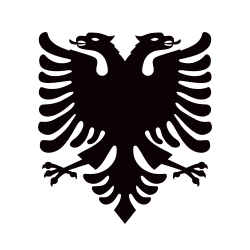
Double-Headed Eagle
Symbolic Profile
Primary Name: Double-Headed Eagle (Aquila Biceps / Bicephalic Eagle)
Common Aliases: Bicephalic Eagle, Aquila Biceps, Imperial Eagle, Eagle of Lagash, Eagle of the Holy Roman Empire, Byzantine Eagle, Eagle of the 33rd Degree, Reichsadler, Double-Headed Raptor, Eagle of the Scottish Rite
Visual Core (the baseline shape): A symmetrical raptor displaying two heads facing opposite directions (east and west) attached to a single body, with spread wings, outcurved claws, and often crowned or grasping imperial regalia (scepter, orb, sword, or lightning)
Exoteric Keywords (surface meaning): Imperial power, dual sovereignty, majesty, East and West, empire, military vigilance, royal heraldry, supreme statehood, national unity
Esoteric Keywords (occult meaning): Coniunctio Oppositorum (Reconciliation of Opposites), Dual Sovereignty (Spiritual and Temporal), Hermetic Rebis, Janus-Faced Omniscience, Spes Mea in Deo Est, Transcendent Synthesis, The Alchemical Double Mercury, Macrocosmic Equilibrium
Astrological or Planetary links: Jupiter (♃, Imperial Sovereignty and Supreme Law), The Sun (☉, Solar Illumination and All-Seeing Eye), Saturn (♄, Mastery over Past and Future / Time and Space), Sol-Luna Syzygy
Alchemical Associations: The Hermetic Rebis (The Divine Hermaphrodite / Dual Nature of Matter), Coniunctio Oppositorum, Synthesis of Volatile (Air/Bird) and Fixed (Earth/Regalia), Double Quicksilver (Mercury of the Wise), The Great Work completed in Dual Harmony
Associated Metals: Imperial Gold (Solar Majesty), Electrum (Sun-Moon Alloy), Platinum, Iron (Martial Defense)
Traditional Colours: Imperial Gold, Sable Black (Nigredo / Power), Royal Crimson / Tyrian Purple, Pure White (Albedo)
Form and Origin
Natural or Material Inspiration
Inspired by the apex predatory birds of prey—specifically the golden eagle and sea-eagle—whose soaring altitude, panoramic vision, and fierce hunting prowess made them universal emblems of celestial power. The doubled head is a mythological augmentation of nature, synthesizing the raptor's physical majesty with the human concept of dual perspective, temporal omniscience, and bi-directional dominion across both horizons of the earth.
Geometric Philosophy
Geometrically, the Double-Headed Eagle represents a bilateral reflection across a central vertical axis (Axis Mundi). The single body forms the central vertical trunk (the mediator/pillar), while the two heads radiate 180 degrees apart, creating a balanced horizontal arc that spans 360 degrees of vision. It resolves the duality of two distinct points into a singular central origin, embodying the mathematical principle + 1 = 1$—the fusion of binary polarities into a higher monadic unity.
Historical Evolution of the Form
The bicephalic raptor is one of humanity's oldest heraldic devices, originating in Bronze Age Mesopotamia as the emblem of the Sumerian city-state of Lagash (c. 2500 BCE) and prominently featured in Hittite stone reliefs at Alaca Höyük and Yazılıkaya. It migrated into Byzantine imperial symbolism under the Palaiologos dynasty to represent Rome's dual dominion over Europe and Asia (West and East). It was later adopted by the Holy Roman Empire (under Sigismund in 1433), the Russian Empire (as the successor to Byzantium), and codified in 18th-century Freemasonry as the supreme emblem of the Scottish Rite (Ancient and Accepted Scottish Rite of Freemasonry).
Mythological and Cultural Context
The Origin Point
The symbol first crystallized in ancient Anatolia and Mesopotamia among the Hittites and Sumerians, where the doubled eagle served as a sacred attendant to the storm-god Teshub and the solar deity. It symbolized the god's capacity to survey both sunrise and sunset simultaneously, acting as a divine guardian against chaotic forces coming from any direction.
Cultural Migration
Following the collapse of the Hittite Empire, the emblem lay dormant in Anatolian iconography until revived by the Byzantine Empire in the 10th century. As Byzantine culture influenced surrounding civilizations, the bicephalic eagle was embraced across Christian Europe and the Islamic world—appearing on Seljuk Turkish monuments, medieval European armorials, and royal banners. In the 18th century, the emblem entered high-degree ceremonial Freemasonry as the crest of the 33rd Degree (Supreme Council), bearing the Latin motto Spes Mea in Deo Est ("My Hope is in God").
Folklore and Ritual Use
In imperial court ceremonial and coronation rites, the Double-Headed Eagle functioned as an apotropaic charm of state, painted on imperial banners, engraved on royal scepters, and embroidered upon coronation robes to establish the monarch's dual role as protector of both church and state, realm and spirit. In Masonic ritual, the eagle's two heads signify the balancing of wisdom and power, serving as a contemplative seal for those who have attained the highest levels of initiation.
Esoteric and Psychological Depths
Jungian Archetypes
In analytical psychology, the Double-Headed Eagle is a supreme representation of the Reconciled Self and the psychological integration of opposites (Coniunctio Oppositorum). Carl Jung noted that when the psyche matures, it must look simultaneously toward the conscious world (the West/External) and the unconscious realm (the East/Internal). The double head reflects the individual's capacity to maintain total awareness of conflicting dualities—light and shadow, male and female, spirit and instinct—without being torn apart, anchoring both in a single integrated ego-center.
Occult and Mystical Usage
In Hermeticism, Rosicrucianism, and Scottish Rite Freemasonry, the Double-Headed Eagle represents the Alchemical Rebis—the divine hermaphrodite or perfected human who has synthesized the active solar force (Sol) and passive lunar force (Luna). The two heads look backward at the past (Memory/Origins) and forward into the future (Prophecy/Destiny), while standing anchored on the sword of justice. In Qabalah, the two heads correspond to the twin pillars of Mercy (Chesed) and Severity (Geburah), united in the central pillar of Equilibrium (Tiphereth/Kether).
Dream Symbology
Dreaming of a Double-Headed Eagle portends a profound confrontation with dual paths, the necessity of making a sovereign choice, or the arrival of panoramic spiritual vision. It indicates that the dreamer is being called to transcend one-sided thinking and synthesize two opposing aspects of their life—such as career and spiritual calling, or intellect and emotion—into a unified, commanding posture.
Themes and Pairings
Core Thematic Associations
Dual sovereignty, reconciliation of opposites, East and West, spiritual and temporal authority, Janus-faced omniscience, imperial majesty, macrocosmic equilibrium, and the completion of the Great Work.
Traditional Pairings
The Sovereign Sword and Orb, The Imperial Crown, The Alchemical Rebis, The Sun and Moon (Sol et Luna), The Twin Pillars (Jachin and Boaz), and The Masonic Motto Ordo Ab Chao.
Contrasting Symbols
The Single-Headed Raptor (Focused one-sided direction), The Divided Serpent (Unintegrated conflict), The Ouroboros (Cyclic recycling without synthesis), and Fragmented Geometry.
Quotations
"The double-headed eagle is the supreme heraldic emblem of the Hermetic Rebis—the integration of Sol and Luna, spiritual authority and temporal power, looking simultaneously into the realm of origin and the realm of destiny."
J. E. Cirlot, A Dictionary of Symbols, 1962
"In the Ancient and Accepted Scottish Rite, the double-headed eagle represents the absolute equilibrium of power and wisdom, looking to both the East and the West to proclaim the universal reign of order over chaos."
Daniel Beresniak, Symbols of Freemasonry, 1997
"The double head of the royal raptor is an archetypal image of the Self that has conquered one-sidedness. It gazes into the light of consciousness and the depths of the unconscious with equal, unblinking vigilance."
Carl Gustav Jung, Mysterium Coniunctionis (Collected Works, Vol. 14), 1956
Reference Library
Notable Masterworks
- Hittite Double-Headed Eagle Stone Reliefs — Alaca Höyük Archeological Site (c. 1400 BCE, Turkey)
- Imperial Double-Headed Eagle Coat of Arms of the Holy Roman Empire — Albrecht Dürer / Imperial Armorials (c. 1512)
- Emblem of the Supreme Council 33rd Degree Scottish Rite — Masonic Engravings (18th–19th Century)
- Byzantine Imperial Eagle Mosaics — Church of St. George / Ecumenical Patriarchate (Istanbul)
Primary Texts
- J. E. Cirlot: A Dictionary of Symbols (Entry on Eagle and Bicephalic Imagery)
- Albert Pike: Morals and Dogma of the Ancient and Accepted Scottish Rite (33rd Degree Symbolism)
- Carl Gustav Jung: Mysterium Coniunctionis (On the Reconciliation of Opposites and Dual-Headed Archetypes)