

Philosophers Stone
Symbolic Profile
Primary Name: Philosopher's Stone (Lapis Philosophorum)
Common Aliases: Lapis Philosophorum, The Great Elixir, Universal Panacea, Sophic Stone, The Powder of Projection, Rebis (The Double Being), Filius Philosophorum (Child of the Philosophers), Red Tincture, The Diamond Body, Crown of the Wise, Cornerstone of the Temple
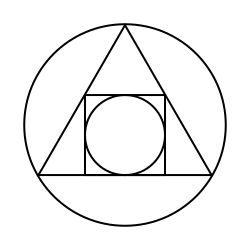
Visual Core (the baseline shape): The Squaring of the Circle—a central point surrounded by a triangle, enclosed in a square, within an outer circle; or the crowned hermaphroditic Rebis standing atop a dragon and winged globe; or a brilliant, ruby-red / transparent cubical stone set upon its apex
Exoteric Keywords (surface meaning): Gold-making, transmutation of base metals, physical longevity, ultimate treasure, catalyst, material wealth, universal medicine, perfection of nature
Esoteric Keywords (occult meaning): Coincidentia Oppositorum (Union of Opposites), Individuation / Psychological Wholeness, The Christ-Lapis Parallel, Quintessence (Fifth Element), Solve et Coagula, Transmutation of Consciousness, Unio Mystica, Resuscitated Body, The Incorruptible Root (Radix Vitae)
Astrological or Planetary links: The Seven Planets Harmonized in Electrum, Sol (☉) and Luna (☽) Conjunction, The Central Sun of the Universe, The Fixed Axis Mundi / Pole Star, The Zodiacal Circle of Completion
Alchemical Associations: The Magnum Opus (Great Work), The Four Stages (Nigredo, Albedo, Citrinitas, Rubedo), Rebis / Hermaphrodite, The Chemical Wedding, Sulphur-Mercury-Salt Triad, V.I.T.R.I.O.L. (Visita Interiora Terrae Rectificando Invenies Occultum Lapidem)
Associated Metals: Philosophic Gold (Aurum Nostrum), Philosophic Mercury / Quicksilver, Electrum (The sacred alloy of all seven planetary metals)
Traditional Colours: Crimson / Ruby Red (Rubedo / The Red Lion), Pure White (Albedo / The White Eagle / Diamond), Radiant Gold (Solar Illumination), Peacock's Tail (Cauda Pavonis / Iris of All Colours), Deep Black (Nigredo / The Primordial Clay)
Form and Origin
Natural or Material Inspiration
The concept of the Philosopher's Stone is derived from humanity's observation of natural transformative processes in the mineral, botanical, and biological realms. In nature, early observers witnessed base, dark, and corruptible Ores in the earth slowly maturing through cosmic heat toward pure gold; the caterpillar dying within its dark chrysalis to emerge as a winged butterfly; seeds rotting in damp soil (putrefaction) before bursting into flourishing vegetation; and raw quartz or coal crystallizing under intense pressure into brilliant, unyielding diamonds. These physical transmutations served as living proofs that an invisible, organizing life-force (Quintessence) resides within crude matter, waiting to be liberated and perfected.
Geometric Philosophy
Geometrically, the Philosopher's Stone is represented by the famous emblem of the Squaring of the Circle (Quadratura Circuli). In sacred geometry, the circle symbolizes unmanifest Spirit and infinite divine space, while the square symbolizes manifest Matter and the four physical elements (Fire, Water, Air, Earth). The central point represents the zero-dimensional divine spark (Monad / Bindu), and the triangle represents the soul's mediating ternary (Sulphur, Mercury, Salt). To "square the circle" is to solve the ultimate geometric paradox: reconciling the infinite, transcendental realm of Spirit with the bounded, rational realm of terrestrial Matter, binding them into an integrated, indestructible quaternity.
Historical Evolution of the Form
The iconography of the Philosopher's Stone evolved over two millennia across Greco-Egyptian, Islamic, and European traditions. Originating in Hellenistic Alexandria (c. 1st–3rd century CE) through figures like Zosimos of Panopolis and Maria Prophetissa—who formulated the axiom "One becomes two, two becomes three, and out of the third comes the one as the fourth"—the symbol was understood as the Lapis et non Lapis ("stone that is not a stone"). In Islamic alchemy, Jabir ibn Hayyan and Senior Zadith expanded it into the Al-Iksir (Elixir). During the European Middle Ages and Renaissance, Christian Hermetists (such as Paracelsus, Heinrich Khunrath, Michael Maier, and Jacob Boehme) equated the Stone with Christ, the rejected cornerstone. In the 20th century, Carl Jung and Marie-Louise von Franz reinterpreted the Lapis as the supreme psychological archetype of the Self.
Mythological and Cultural Context
The Origin Point
The Philosopher's Stone emerged in Alexandria, Egypt—the melting pot where Egyptian metallurgy (khem), Greek Platonic geometry, and Gnostic soteriology merged. In the earliest alchemical papyri, the Stone was described as an arcane substance or divine water (hudor theion) hidden within the massa confusa or primordial chaos. It was envisioned as the Deus Absconditus—the divine light veiled within the dense, dark lead of physical reality, requiring the labor of the natural philosopher to unearth and redeem.
Cultural Migration
As alchemical lore migrated across the Mediterranean, the Stone was embraced across diverse religious and philosophical frameworks. In the Islamic world, it became the Azoth and the Universal Solvent. In medieval Europe, Christian alchemists drew direct parallels between the Great Work and the Passion of Christ: just as Christ suffered, died, and was resurrected in a glorified body, base metal was subjected to the furnace, destroyed in nigredo, and resurrected as immortal gold (Lapis-Christus). In Chinese Daoist alchemy (Waidan and Neidan), the Stone found its exact counterpart in the Golden Elixir of Immortality (Jindan), while in Rosicrucian and Freemasonic traditions, it materialized as the "Cubical Stone on End" surmounting the foundation of the Temple.
Folklore and Ritual Use
In European folklore, the Philosopher's Stone was celebrated as a miraculous panacea capable of curing all human illnesses, restoring youthful vigor, and transmuting tons of lead into pure gold through a single grain of its "projection powder." Legendary figures such as Nicolas Flamel, Basil Valentine, and the Count of St. Germain were believed to have achieved the Great Work and attained longevity through its secret preparation. In folk tradition, a paradox was always maintained: the Stone is the most precious treasure in the cosmos, yet it is "found everywhere, trodden underfoot in the street, handled by children, and thrown into the dunghill (in sterquilinio)" because the uninitiated fail to perceive its true value.
Esoteric and Psychological Depths
Jungian Archetypes
In analytical psychology, Carl Jung identified the Philosopher's Stone as the ultimate, supreme symbol of the Self and the culmination of the Individuation process. Jung demonstrated that the alchemical laboratory was a projection screen for the investigator's unconscious psyche. The extraction of the brilliant Lapis from the dark massa confusa maps the ego's arduous journey to integrate the dark, rejected shadow and reconcile the inner masculine (animus) and feminine (anima). The Stone represents psychological wholeness—an unshakeable, self-regulating psychic center that stands firm amidst the turbulent tides of emotion and worldly conflict.
Occult and Mystical Usage
In Hermeticism, Qabalah, and high ceremonial magic, the Stone is both the instrument and the goal of the Magnum Opus. Its operational formula is encoded in the alchemical acrostic V.I.T.R.I.O.L.: "Visita Interiora Terrae Rectificando Invenies Occultum Lapidem" ("Visit the interior of the earth; by rectification you will find the hidden stone"). This instructs the practitioner to descend into the subterranean depths of their own physical body and unconscious mind, purifying crude passions through the secret fire of meditation (Solve) and congealing the divine spirit into a permanent, exalted vehicle (Coagula).
Dream Symbology
Dreaming of a Philosopher's Stone, an extraordinarily radiant ruby or diamond, a golden egg in a furnace, or a crowned hermaphroditic figure indicates that the dreamer is undergoing a profound spiritual rebirth and psychic consolidation. It portends the resolution of an intense inner conflict, signaling that past emotional suffering (nigredo) has matured into spiritual wisdom and an unassailable sense of core identity (the Diamond Body).
Themes and Pairings
Core Thematic Associations
The primary themes embodied by the Philosopher's Stone are the reconciliation of opposites (coincidentia oppositorum), the spiritualization of matter and incarnation of spirit, divine perfection, incorruptibility, universal healing, eternal renewal, and the realization of the All within the One.
Traditional Pairings
The Philosopher's Stone is traditionally paired with the Rebis / Hermaphrodite (its human personification), Sol and Luna (The Sun King and Moon Queen), The Ouroboros (The serpent swallowing its tail), The Phoenix (Rebirth from the ashes), The Athanor (The sealed furnace of transformation), The Emerald Tablet (Tabula Smaragdina), and The Rose Cross.
Contrasting Symbols
The direct polar opposites of the Philosopher's Stone are Unrefined Lead / Massa Confusa (Unconscious, heavy, corruptible matter prior to purification), Multiplicity / Fragmentation (The scattered, uncentered ego lost in worldly illusions), and Vulgar Gold (Aurum Vulgi / Material greed and physical wealth detached from spiritual wisdom).
Quotations
"Make a circle of the man and the woman, and draw out of this a square, and out of the square a triangle. Make a round circle and you will have the Stone of the Philosophers."
Rosarium Philosophorum, Artis Auriferae, 1550
"Between Eternal Birth, Restoration from the Fall, and the discovery of the Philosopher's Stone, there is no difference."
Jacob Boehme, De Signatura Rerum, 1622
"The alchemical stone is no ordinary stone, but a symbol for the psychological center of the personality—the Self—which reconciles all opposing forces within the unconscious and brings forth the incorruptible light."
Carl Gustav Jung, Psychology and Alchemy / Collected Works, 1944
Reference Library
Notable Masterworks
- Emblem XXI: Squaring the Circle (Atalanta Fugiens) — Michael Maier & Johann Theodor de Bry (1618)
- The Rebis / Double-Headed Hermaphrodite (Theatrum Chemicum / Basil Valentine) — Johann Theodor de Bry (1613)
- The Ripley Scroll (The Alchemical Process and Bird of Hermes) — Sir George Ripley (c. 15th Century, British Library & Yale University Collection)
- Mutus Liber (The Silent Book, Plate 8 & Plate 15) — Altus / Jacobus Sulat (1677, La Rochelle)
- Amphitheatrum Sapientiae Aeternae (The Alchemical Citadel and Emerald Tablet Engravings) — Heinrich Khunrath (1609, Hanau)
Primary Texts
- Tabula Smaragdina (The Emerald Tablet of Hermes Trismegistus) (c. 8th–12th Century Hermetic Text)
- Rosarium Philosophorum (The Rosary of the Philosophers) (1550, Artis Auriferae, Basel)
- Jacob Boehme: De Signatura Rerum (The Signature of All Things) (1622)
- Carl Gustav Jung: Psychology and Alchemy (1944, Collected Works Vol. 12)